
Manal Saleh
Riyadh,
Saudi Arabia – 17 Aug 2026 - For years, advanced certification in smartphones has been
closely associated with flagship devices. Independent drop testing, high levels
of water protection and recognised durability ratings were often treated as
premium differentiators, particularly when combined in a single device.
A
new shift is underway as certification moves beyond flagship tiers and into the
mass market. This is not simply a product upgrade. It reflects a broader
evolution in consumer expectations and in how manufacturers define quality
across more accessible price segments.
From
Premium Feature to Baseline Expectation
Durability
is no longer a niche requirement. Users increasingly expect smartphones to
withstand the realities of everyday life, from accidental drops and demanding
work environments to dust, rain and unexpected water exposure.
This
is pushing manufacturers to rethink how quality is built into more accessible
price segments. Certified drop protection and high levels of water and dust
resistance are moving beyond premium models, raising expectations across the
mass market.
However,
no certification makes a device damage-proof. Ratings and test results apply
under defined conditions and cannot predict the outcome of every accident.
Their value lies in showing how a device has been assessed.
Certification
as a Signal of Trust
At
the mass-market level, certification can show that a durability claim has been
tested against defined criteria, offering reassurance in a competitive
category.
Independent
certification, manufacturer laboratory testing and recognised protection
ratings do not measure the same thing.
Independent
certification assesses performance against specific durability requirements.
Manufacturer testing covers additional controlled scenarios, and IP ratings
indicate protection against dust and water.
Together,
these measures can give consumers clearer points of comparison, particularly in
segments where purchasing decisions have traditionally been driven by price and
basic specifications.
A
Category in Transition
The
expansion of certification into more accessible devices signals a wider
transition within the handset category. Innovation is no longer defined solely
by performance specifications or camera systems. Instead, it is increasingly
tied to how well a device supports long-term, everyday use.
Battery
longevity, resilience, and consistent performance are emerging as important
pillars of value, shifting the category towards more practical definitions of
innovation grounded in real-world use.
For
mass-market consumers, this is especially relevant. Repairing or replacing a
damaged phone may represent a significant additional cost, making durability an
important part of the overall ownership proposition.
HONOR
X7e Plus 5G: A Broader Market Movement
The
HONOR X7e Plus 5G reflects this wider industry direction. Positioned within the
mass market, it integrates features that were previously associated with
higher-tier devices.
The
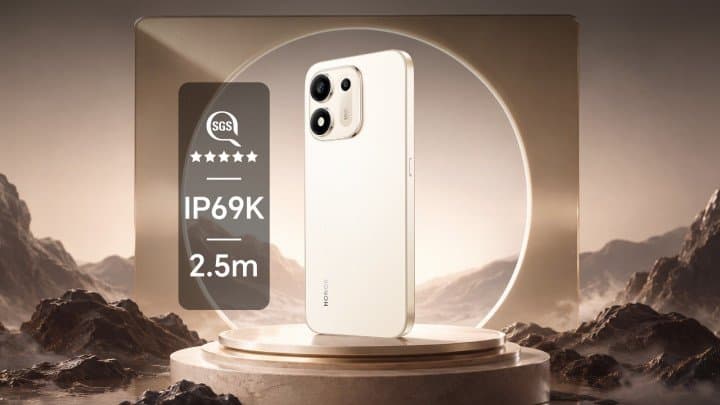
device carries SGS five-star all-round drop-resistance certification, while
HONOR laboratory testing covers drops of up to 2.5 metres under specified
conditions. It also carries Industry-leading IP68, IP69, and IP69K ratings. This exceptional
protection guarantees flawless functionality against fine dust, high-pressure
water jets, and complete submersion up to 1.5 meters.
This
exemplifies how independently assessed durability and higher protection
standards are becoming more available at a more accessible price point. This
represents a broader change in how value is delivered, combining protection,
reliability and everyday usability.
Redefining
the Mass Market
As
certification becomes more common in this segment, it is likely to redefine
competitive dynamics. Consumers will increasingly expect certified durability
and protection as standard, placing pressure on manufacturers to deliver
consistent quality across broader portfolios.
The
rise of certified mass-market devices therefore marks a turning point towards a
more reliability-focused category, where innovation is measured not only by
what a device can do, but also by how well it withstands everyday use.



-large.jpg)
-large.jpg)



كن أول من يشارك رأيه
ابدأ النقاش حول هذه القصة.