

A
phone battery is usually judged by how long it keeps the phone running. But as
people carry more connected devices, stored power becomes even more useful when
it can also be shared.
Earbuds
may run low during a journey. A smartwatch may need a quick top-up before a
workout. Another phone may be close to switching off before an important call,
digital payment or ride booking.
The
usual response is to look for a socket, unpack a charger or reach for a power
bank. That is not always practical, particularly when someone is moving between
locations or has little time to stop.
Reverse
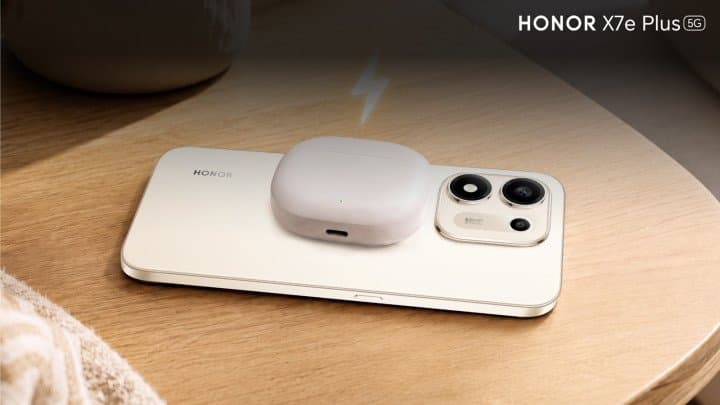
charging changes that. Instead of using its battery only to power itself, the
phone can transfer some of that stored energy to another compatible device.
With
an 8,100mAh battery and reverse charging, the HONOR X7e Plus 5G is an example
of a smartphone that can provide temporary power to compatible earbuds,
smartwatches or another smartphone. In practical terms, it becomes the phone
that charges other things, turning its large battery into a shared reserve for
the devices people rely on throughout the day.
Replenishing
More Power
Before
the phone can share energy, it must first replenish its own battery.
Charging
performance is often judged only by how quickly a device reaches 100%. But
charging time must be understood alongside battery capacity. Filling an
8,100mAh battery requires considerably more energy than filling a smaller
5,000mAh cell.
The
HONOR X7e Plus 5G uses 45W HONOR SuperCharge to fully replenish its battery in
approximately 110 minutes. The importance of that figure lies not only in the
time required, but also in the amount of usable energy available once charging
is complete.
The
phone can be plugged in while someone gets ready in the morning, or prepares
for a journey. Once charged, the larger battery can support calls, navigation,
messaging, entertainment and everyday applications for longer, while preserving
the option to share some of that power later.
When
the Phone Charges Something Else
The
value of reverse charging becomes clearest when another device runs low
unexpectedly.
During
a journey, the phone may provide enough power to keep earbuds working for audio
directions or entertainment. Before a workout, it may help a smartwatch
continue tracking activity. During a busy day, it may give another phone enough
charge to complete an important task.
This
does not make the handset a replacement for a dedicated high-capacity power
bank. A separate power bank remains better suited to repeatedly charging
several devices or supporting longer periods away from a socket. Sharing power
also reduces the battery remaining in the phone, so users still need to decide
how much energy they can spare.
The
advantage is immediacy. There is no additional accessory to find, charge or
remember. The power is already stored in the device most people carry with
them.
By
combining an 8,100mAh battery, 45W HONOR SuperCharge and reverse charging, the
HONOR X7e Plus 5G manages power in both directions. It replenishes a
substantial reserve for its own use and can share some of that energy when
another compatible device needs help.
The
outcome is not simply a phone that lasts longer, but that it can also charge
the other devices that help keep the day moving.
About
HONOR
HONOR
is a global leading AI device ecosystem company. It is committed to
revolutionizing human-to-device interactions to bridge the AI ecosystem with
all consumers in the agentic AI era and beyond. The company endeavors to open
industrial boundaries through open, seamless collaboration to co-create a
value-sharing ecosystem with industry partners. With an innovative product
portfolio spanning AI phones, PCs, tablets, wearables and more, HONOR aims to
empower every human, enabling everyone to embrace the new intelligent world.




-large.jpg)
-large.jpg)


كن أول من يشارك رأيه
ابدأ النقاش حول هذه القصة.