
Rashad Iskandrni
Halfway through 2026, the Arabic songs that have stayed with us
are not necessarily the ones trying to be the loudest in the room. They are the
ones with a clear emotional temperature: a comeback that does not need to
overannounce itself, a rap record that turns pressure into texture, a pop song
that knows the power of a raised eyebrow, and performances where feeling lives
in the phrasing, the pause, and the restraint.
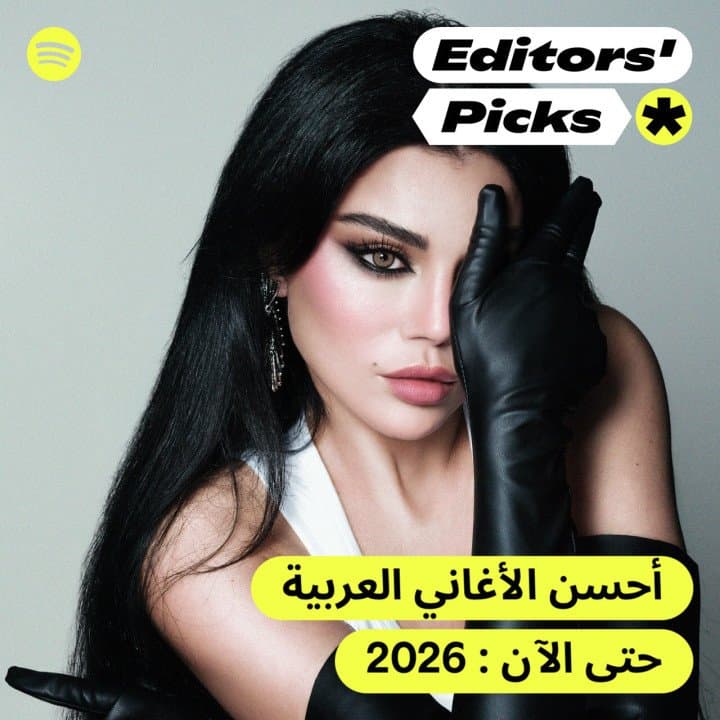
Spotify’s MENA editorial team has hand-selected five Arabic
songs that stood out so far this year, not only as strong releases, but as
songs that say something about where the region’s music conversations are
moving.
These are the tracks that kept resurfacing in editorial
conversations because each one captures a specific artist moment, mood, or
shift. The selection is rooted in songwriting, musicality, distinctiveness, and
the way each song holds its place within the wider Arabic music landscape.
For Spotify’s editors, the list is less about naming a
definitive top five and more about reading the year through songs that reveal
what artists are choosing to say, how they are choosing to say it, and why
listeners are leaning in.
“This year, we have seen a wave of new sounds and creative ideas
coming from artists listeners already know and love,” said Nadia Eldeghidi,
Egypt Editor at Spotify.
“What stands out in Egypt this year is that familiar voices are
not just returning with more of the same. They are finding new ways into
emotion, pop drama, street language, and everyday feeling. Egyptian pop feels
especially open right now.”
Across Morocco, Algeria, and Tunisia, artists continue to bring
a sharp and self-assured point of view to the wider Arabic music conversation.
“For Morocco, this has been a transformative year, with
experimentation at the center of it,” said Mehdi Zim, Maghreb Editor at
Spotify.
“We are hearing new
sounds, seeing more emerging artists come through, and watching artists build
stronger creative identities. There is a confidence in the language, the
production, and the delivery. The music keeps its accent, its edges, and its
pace, and that is what gives it force.”
The selection also makes room for the quieter power of Khaleeji
music and the melodic pull of the Levant, where vocal identity and emotional
detail remain central to how songs connect.
“Across Saudi and Khaleeji music, emotion often lives in
control,” said Salih Alzuhair, Saudi Arabia Editor at Spotify.
“A song does not always need to be dramatic to be heavy.
Sometimes the weight is in the phrasing, the patience of the melody, and the
way the vocal performance holds back before opening into full emotion.
Levantine pop, meanwhile, continues to remind us how much character can sit
inside lightness, whether it comes through sass, softness, or the kind of
melody that feels like a first cup of coffee in the morning.”
Here are Spotify’s Editors’ Picks for the Best Arabic Songs of
the Year So Far.
Sherine — “Tebaa’n Tebaa’n” / “تباعاً تباعاً”
In one of the most closely watched returns in Arabic pop right
now, Sherine released “Tebaa’n
Tebaa’n,” her second single this year following a
long hiatus. The track does not try to reinvent her. It does something more
powerful: it trusts the emotional language she has spent years making her own.
Her performance is warm, unhurried, and exposed in a way that
feels lived-in rather than performed. “Tebaa’n Tebaa’n”
reads like a slow exhale after a long silence — a reminder that Sherine’s voice
has always carried its power through closeness. She does not need to push for
feeling to land; the feeling is already there.
Dizzy DROS — “LAMERDE”
Thirteen years after his debut, Dizzy DROS
makes a bold artistic statement with his second album, and “LAMERDE”
stands out as one of its clearest moments of intent.
Built around electronic textures, the track captures a shared
sense of pressure: the feeling of moving through noise while carrying something
heavier underneath. What makes it work is that the risk does not feel
decorative. The production pushes Dizzy DROS into
a more charged space, but it does not dilute the tension and rawness that have
long defined his voice. “LAMERDE”
earns its place because it sounds like an artist refusing to repeat himself.
Haifa Wehbe — “Shou El
Matloub?”
With “Shou El
Matloub?”, Haifa Wehbe
sounds completely at ease, turning everyday criticism into a playful pop
statement.
The hook is cheeky, the lyrics are sharp, and the delivery lands
with the kind of confidence that cannot be forced. It is a reminder of what
Haifa does best: she understands tone. She knows when to wink, when to push,
and when to let the attitude carry the record. The result is a song that feels
light on the surface, but very deliberate in its construction — pop instinct
dressed as effortlessness.
Abdulmajeed
Abdullah — “كنت ماعرفك”
With “كنت ماعرفك,” Abdulmajeed
Abdullah adds another song to the romantic world he
has built over the years, one defined by
emotional control, melodic patience, and a voice that carries feeling without
needing to overstate it.
The track sits comfortably within the Khaleeji songbook that
Abdulmajeed has helped shape, but its strength is in how quietly it moves. The
arrangement gives his voice room, allowing the emotion to sit in the phrasing,
the pauses, and the softness of the delivery. It is a reminder that in Khaleeji
music, restraint can be just as affecting as drama, and that Abdulmajeed remains
one of its most trusted interpreters.
Saint Levant — “SABAH EL WARD”
With “SABAH EL WARD,” Saint Levant
draws on the warmth and romance of classic Arabic music to create one of his
most understated releases to date. Built around gentle melodies, nostalgic
instrumentation, and vivid snapshots of everyday life, the song finds beauty in
familiar rituals.
What makes the track stand out is its sense of place. From
morning greetings and jasmine to neighbourhood markets and shared routines, “SABAH EL WARD”
captures a kind of intimacy that feels deeply rooted in the region while
remaining unmistakably contemporary. It is a reminder that some of the most
memorable songs are the ones that slow things down, finding emotion in the
ordinary and bringing timeless Arabic musical influences into the present.
Watch the extended editors’ picks here





-large.jpg)
-large.jpg)


كن أول من يشارك رأيه
ابدأ النقاش حول هذه القصة.