
|
Manal Saleh Global
research involving over 6,000 students and 58 experts offers insights for
developing human capabilities alongside technical skills
· More
than eight in 10 students (82%) expressed concern that while AI helps them
work faster, they may not be learning material as deeply. · The
report calls for stronger collaboration to develop skills that remain
valuable as technology evolves.
Riyadh,
Saudi Arabia,3rd
November 2026–
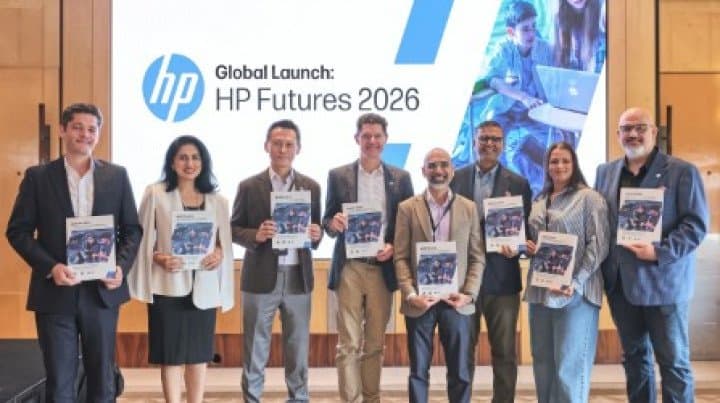
As Saudi Arabia continues to expand AI education and advance workforce
readiness under Vision 2030, HP's recently published Futures 2026 report
highlights the importance of developing creativity, critical thinking and
problem-solving alongside technical knowledge. Based on a survey of 6,206
students across 37 countries and insights from 58 education and
future-of-work experts, the global report explores how to prepare young
people for an AI-driven economy. The initiative is led by HP, the Global
Learning Council and the Education Leaders Forum.
The findings offer a timely
perspective as Saudi Arabia strengthens connections between education and
labor-market needs. The Kingdom’s Human Capability Development Program
prioritizes future-ready skills and lifelong learning. AI learning was
introduced in general education in the 2025–2026 academic year, creating
opportunities to develop independent thinking and practical problem-solving
alongside technical knowledge. In the global survey, creativity
and critical thinking were each selected by 56% of respondents as important
skills for the future job market. Communication and collaboration followed at
52%, ahead of AI and digital literacy at 44%; technical or coding skills
ranked eighth at 29%. These findings indicate students value transferable
human capabilities alongside AI skills.
David
McQuarrie, Chief Commercial Officer at HP and Chair of HP Futures, said
“Educators, policymakers and employers share a responsibility to prepare
young people for the opportunities and challenges they will encounter
throughout their lives and careers. As artificial intelligence rapidly
transforms how we learn and work, that responsibility has never been more
important. Education systems must do more to help students develop,
demonstrate and continuously strengthen the capabilities that will remain
valuable regardless of how technology evolves.”
HP continues to support Saudi
Arabia's ambitions to develop future-ready talent through educational
initiatives and partnerships focused on practical digital skills and emerging
technologies. Its education programs have reached 1.5 million beneficiaries
in Saudi Arabia, while its partnership with Tuwaiq Academy has delivered nine
training programs and certified more than 180 learners in game development
and emerging technology skills. The HP AI Academy, including its AI Foundry
learning program, supports AI literacy and practical applications without
requiring technical prerequisites. HP also collaborates with the National
eLearning Center and Saudi Electronic University through FutureX to support
access to industry-relevant digital learning. The report also identifies an
important tension in how students experience AI. Globally, 82% worry that
while the technology helps them complete tasks faster, it may affect how
deeply they understand the material. The findings highlight the importance of
encouraging students to critically evaluate AI-generated information while
developing independent thinking and deeper understanding. At the same time, respondents
remain optimistic about their future careers. Nearly two-thirds (61%) believe
AI will create more opportunities than it eliminates. Eighty percent feel
confident they can use AI effectively in their future careers, while 81%
believe their education is preparing them for work. The findings underline
the opportunity alongside the need for human judgment. Mayank
Dhingra, Director & Global Head – Education Business and Strategy at HP,
added “HP Futures 2026 gives a unique snapshot of the global student
perspective on what young people today think about the skills they need to
own, and the impact AI is having on their thinking, their lives and their job
prospects.
“Most
strikingly, these students warned that while they feel AI-confident and AI is
helping them to work faster, they are concerned that they are not learning
material as deeply. It is vital that student voices are prominent in the
conversation as education systems make decisions around the future of
curricula and assessment models.” HP Futures 2026 highlights the
importance of developing durable skills such as creativity, critical thinking
and communication alongside technical knowledge as education systems prepare
students for an AI-driven future. The report also recognizes the essential
role of educators in strengthening foundational skills, promoting practical
learning experiences and supporting responsible AI use. These insights align
with Saudi Arabia's ongoing focus on human capability development and
underscore the value of collaboration between educational institutions and
employers to connect classroom learning with real-world opportunities. For Saudi Arabia, these global
insights offer a framework for discussing future workforce needs. Readiness
depends not simply on access to technology, but on the ability to use it
creatively, critically and with sound judgment.
The
full HP Futures 2026 report is available at HP Futures Report 2026 - HP Futures
Methodology: HP Futures conducted an online survey from May to June 2026, which
received 6,206 responses from students in 37 countries across versions
published in English, Spanish, Portuguese, Bahasa Indonesia, Italian and
Arabic. Respondents ranged from under 12 to over 25 years old, with 88% of
those stating an age between 12 and 17. The report also convened 58 leading experts for a series of
roundtable discussions and one-to-one interviews, and compiled a series of
practical case studies from schools, universities, employers, NGOs and public
systems around the world.
About HP HP Inc. (NYSE: HPQ) is a global technology leader and creator of
solutions that enable people to bring their ideas to life and connect to the
things that matter most. Operating in more than 170 countries, HP delivers a
wide range of innovative and sustainable devices, services and subscriptions
for personal computing, printing, 3D printing, hybrid work, gaming, and more.
For more information, please visit: http://www.hp.com. |
SO
نرصد المشهد لك
جاري تحميل آخر الأخبار


كن أول من يشارك رأيه
ابدأ النقاش حول هذه القصة.