

Rashad Iskandrni
Alriyadh
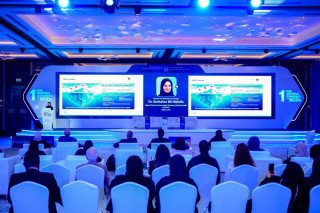
The Dwarfism Forum was held and included
scientific discussions about achondroplasia in children, highlighting its
impact on society, while also providing information on its causes and the
latest available treatment options. The forum brought together a distinguished
group of consultants in genetics and endocrinology, as well as specialists in
the management of skeletal disorders.
The campaign aimed to enhance medical
awareness of achondroplasia, highlight the latest medical developments and
available treatment options, and discuss their role in improving growth
outcomes in children and reducing complications associated with the condition.
This can contribute to improving their quality of life and supporting their
active integration into society.
In-depth scientific sessions were also held,
during which participants discussed the latest clinical updates, scientific
criteria for the use of advanced treatments, modern protocols for early
diagnosis and structured medical intervention, and comprehensive
multidisciplinary approaches to patient care.
Dr. Maha Faden Consultant of medical genetics
and Inherited Skeletal Dysplasia at King Saud Medical City reviewed the latest
medical and research updates in managing rare bone dwarfism diseases,
emphasizing the importance of community awareness regarding early screening to
improve the quality of life for affected individuals
Faden noted that recent efforts in modern
biological treatments for achondroplasia work to stimulate long bone growth in
children with dwarfism. She pointed out that the mechanism of action of these
treatments involves inhibiting the cellular signaling pathway responsible for
slowing down and naturally preventing cartilage growth, which helps limbs grow
better and improves the patient’s skeletal structure.
Dr. Maha Faden—who contributed to the
establishment and development of the Medical Genetics Unit at King Saud Medical
City—called for the urgent need to spread early health awareness regarding rare
genetic diseases in the community, stressing the importance of encouraging
families to take advantage of advanced genetic testing and modern technologies
due to their pivotal role in achieving rapid and accurate diagnosis, and
initiating medical interventions in record time to ensure maximum treatment
efficacy.
Meanwhile, Dr. Abdulhadi Habib Consultant of
Pediatric Endocrinology at Prince Mohammed bin Abdulaziz Hospital in Madinah
stressed the extreme importance of early diagnosis and comprehensive
psychological support, providing families with an ideal opportunity for
psychological preparation and sound treatment planning before welcoming the
newborn.
The consultant noted that the historical leap
in therapeutic research for this condition herald’s successes not only in
increasing height, but also extends to treating and alleviating complications
and congenital malformations associated with the condition, most notably spinal
curvature and spinal stenosis, which grants patients better mobility and
protects them from chronic pain.
Dr. Abdulhadi Habib stressed the need to
focus on the psychological and social axis, explaining that individuals with
dwarfism face societal challenges and difficulties represented by bullying in
schools or work environments. He called for intensifying psychological
counseling and moral support efforts for both families and affected individuals
to enhance their ability to cope, build self-confidence, and fully and
effectively integrate into society.
On her part, Dr. Afaf Al-Sagheer, a
Consultant in Pediatric Endocrinology and Pediatrics, and diabetes at King
Faisal Specialist Hospital in Riyadh, explained that the concept of
"dwarfism" does not refer to a single specific condition, but rather
is a clinical description for cases of severe short stature, pointing out that
its medical causes are very broad and exceed 400 different conditions.
The pediatric consultant reviewed the most
prominent medical challenges and complications associated with cartilage-based
dwarfism, warning that some of them can be life-threatening. Among the most
dangerous is foramen magnum stenosis at the base of the skull, which can
compress the brainstem during infancy. Meanwhile, respiratory and motor
disorders—including obstructive sleep apnea, delayed motor skills, and
obesity—rank as prominent challenges, alongside bone and hearing issues such as
recurrent ear infections, hearing loss, spinal curvature, and bowed legs, in
addition to spinal stenosis in adulthood.
The consultant at King Faisal Specialist
Hospital in Riyadh called for diagnosing the condition early, either during
pregnancy through ultrasounds and genetic testing, or immediately after birth.
She emphasized that early intervention changes a child's life trajectory for
three core reasons: early prevention allows for organized monitoring and guides
parents on proper holding and sitting methods for the child to prevent back
hunching, alongside monitoring hearing and nutrition.
Dr. Afaf confirmed that the treatment system
for dwarfism cases is witnessing a true historical shift. She noted that after
decades where the role of medicine was limited to surgically treating
complications, this system is currently witnessing a transition toward treating
the root cause, as modern therapeutics directly target the excessive signaling
originating from the “FGFR3” gene receptor.
The physicians also emphasized that the
availability of such advanced treatments represents a significant step forward
for the healthcare sector in the Kingdom. They stressed the importance of
collaboration among healthcare organizations, the media, and families to raise
health awareness and support patients and their families with reliable and
evidence-based information.



-large.jpg)

-large.jpg)


كن أول من يشارك رأيه
ابدأ النقاش حول هذه القصة.