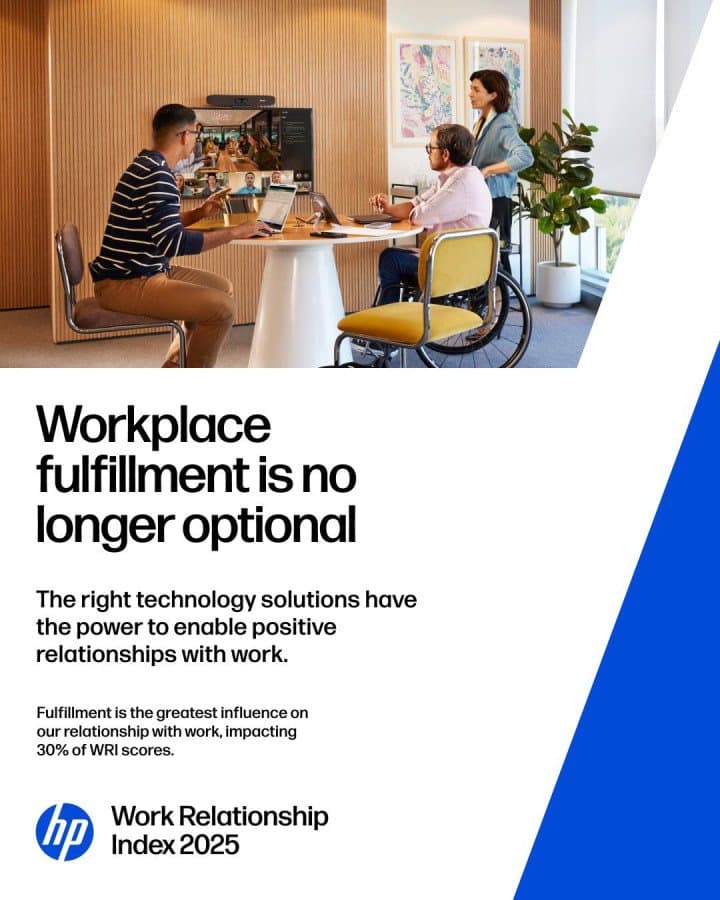
2025 HP Work Relationship Index: Saudi

Manal Saleh
Arabia Leads Peers in Confidence About the
Future of Work, Powered by Technology
and Vision 2030
Third Annual Index Highlights That Despite Disruption, 85% of Workplace
Fulfillment Drivers Are Within Organizations’ Control
While the global Index highlights historic lows in workplace fulfillment, Saudi Arabia stands out
as a positive outlier. (33%) Saudi knowledge workers report a healthy relationship with work
compared to just 20% globally. IT decision makers in the Kingdom score 23 points higher than
their peers worldwide, reflecting confidence in leadership and digital transformation. The
adoption of AI is also more widespread across all generations in Saudi Arabia, including Gen X
and Boomers. At the same time, optimism about technology consistently exceeds global
averages, with 67% of Saudi IT leaders confident that technology will improve work. These
findings underline Saudi Arabia’s unique readiness to lead the future of work in line with Vision
2030.
Riyadh, Saudi Arabia 20th October 2025 – On September 30th
, HP Inc. (NYSE:HPQ) released the
third annual HP Work Relationship Index (WRI), a comprehensive global study that examines how
people around the world – including Saudi Arabia- feel about their relationship with work.
This year’s results reveal that fulfillment at work has hit a historic low. Only 20% of knowledge
workers report a healthy relationship with work, down 8 points from 2024. The Saudi Arabia
findings tell a more nuanced story: one-third of Saudi knowledge workers report a healthy
relationship with work, significantly higher than the global average of 20%. The most dramatic
decline is among business leaders, underscoring a crisis of connection and confidence at the very
top. Yet the study also finds that 85% of the factors influencing workplace fulfillment are within an
organization’s control, underscoring a significant opportunity for businesses to lead change and
rebuild stronger work relationships.
For example, only 44% of knowledge workers say their work gives them a sense of purpose, and
just 39% feel they receive adequate recognition for their contributions. These are fixable problems
that will be critical as businesses seek to embrace a more fulfilling future of work. At the same time,
Saudi workers face growing challenges: 7 in 10 have experienced change at work in the past
year, from redundancies to stricter office mandates, while nearly half (49%) feel profit is
prioritized over people
Work Isn’t Working
The 2025 Index shows employees under pressure, with many reporting rising expectations and a
sense of disconnection. More than 6 in 10 desk-based workers say their company’s expectations
have increased over the past year, while nearly half feel their employer prioritizes profit over people.
At the same time, the findings highlight an opportunity: businesses can reshape the employee
experience through stronger leadership, recognition, flexibility and access to the right tools. By
taking action now, organizations can turn today’s challenges into a foundation for healthier and
more fulfilling work relationships.
Fulfillment Drives Growth
Research confirms that fulfilled employees are not only happier, but also more likely to drive
positive outcomes for their organizations. Workers in the “Healthy Zone” are three times more likely
to feel connected to colleagues, achieve work-life balance and contribute to business growth.
AI as a Positive Enabler
The 2025 Index also demonstrates AI’s potential to reshape the work experience. Four in ten
knowledge workers now use AI daily, and those with access to work-provided AI tools are twice as
likely to report a healthy relationship with work. While, 34% in Saudi Arabia use AI tools provided by
their employers every day, proving the impact of democratizing access to technology.
Yet adoption gaps remain: just 21% of knowledge workers describe themselves as proficient in AI,
compared to 56% of IT decision makers. Businesses that democratize access to AI – through tools
and training – are seeing measurable gains in optimism, productivity and retention.
The Future is Generational
An increasing focus of business leaders, and of this year’s Index, is the immediate impact of young
professionals. Gen Z and Millennials, now the majority of the global workforce, are reshaping work
with new expectations. Saudi Arabia’s youthful workforce is reshaping expectations. By the end of
2025, Gen Z will represent 28% of the Saudi workforce (vs. 27% globally), rising to 32% by 2030
● 51% of Gen Z workers report having a side hustle.
● 4 in 5 Gen Z globally – 8 in 10 in Saudi Arabia- employees would give up part of their salary
for more flexibility and autonomy.Younger generations are leading AI adoption, demanding
purpose-driven leadership, and leaving companies that fail to keep up.
“Workplace fulfillment is becoming a real differentiator for Saudi businesses. While one in three
knowledge workers report a healthy relationship with work — above the global average — many
still face gaps in recognition, flexibility, and support. As Saudi Arabia advances Vision 2030, leaders
must put people at the center and invest in empowering technologies. Generation Z is driving this
shift with new expectations for meaning, flexibility, and innovation, and HP is committed to
supporting organizations in building healthier workplaces for the future.”
— Fadel Saad, Managing Director, HP Saudi Arabia
مواضيع ذات صلة

HP Delivers Measurable Progress in Saudi Arabia Across AI Innovation, Local Manufacturing and Future Skills
منذ ساعتين . News
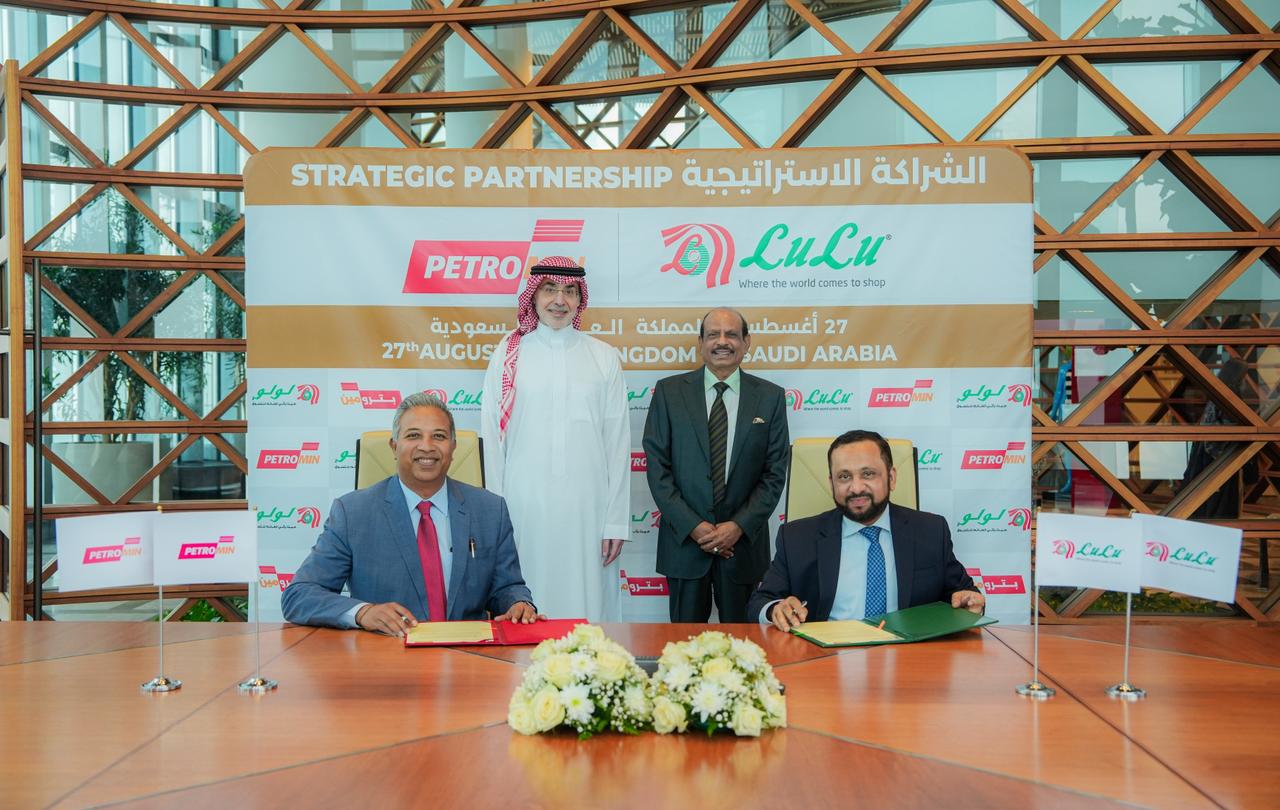
Petromin Energy and Lulu Sign Strategic Partnership to develop 10 SWFT convenience stores in Saudi Arabia
منذ ساعتين . News
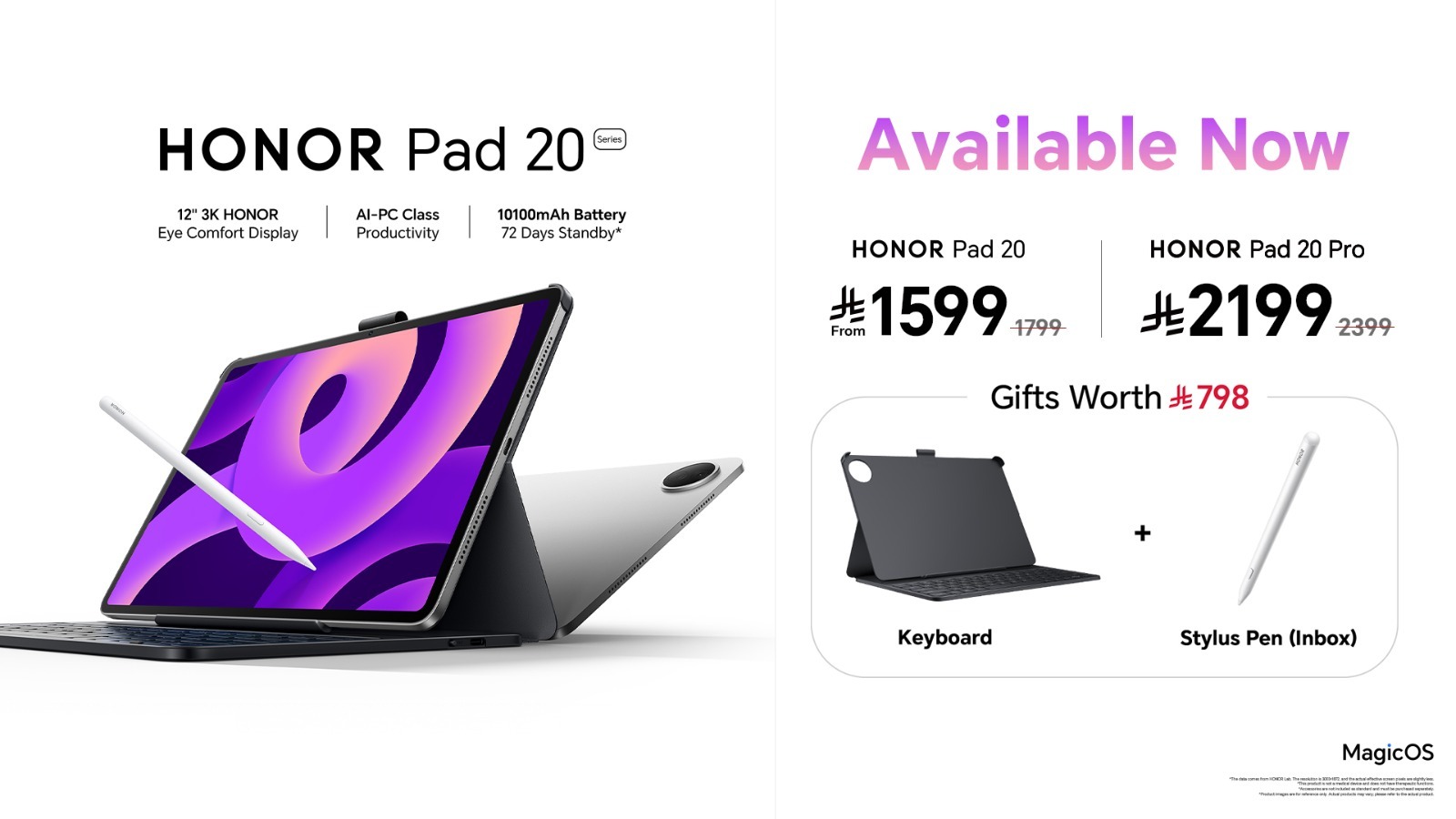
HONOR Pad 20 Brings Desktop-Class Productivity and a Paper-Like Display to a New All-Day Tablet
منذ 3 ساعات . News
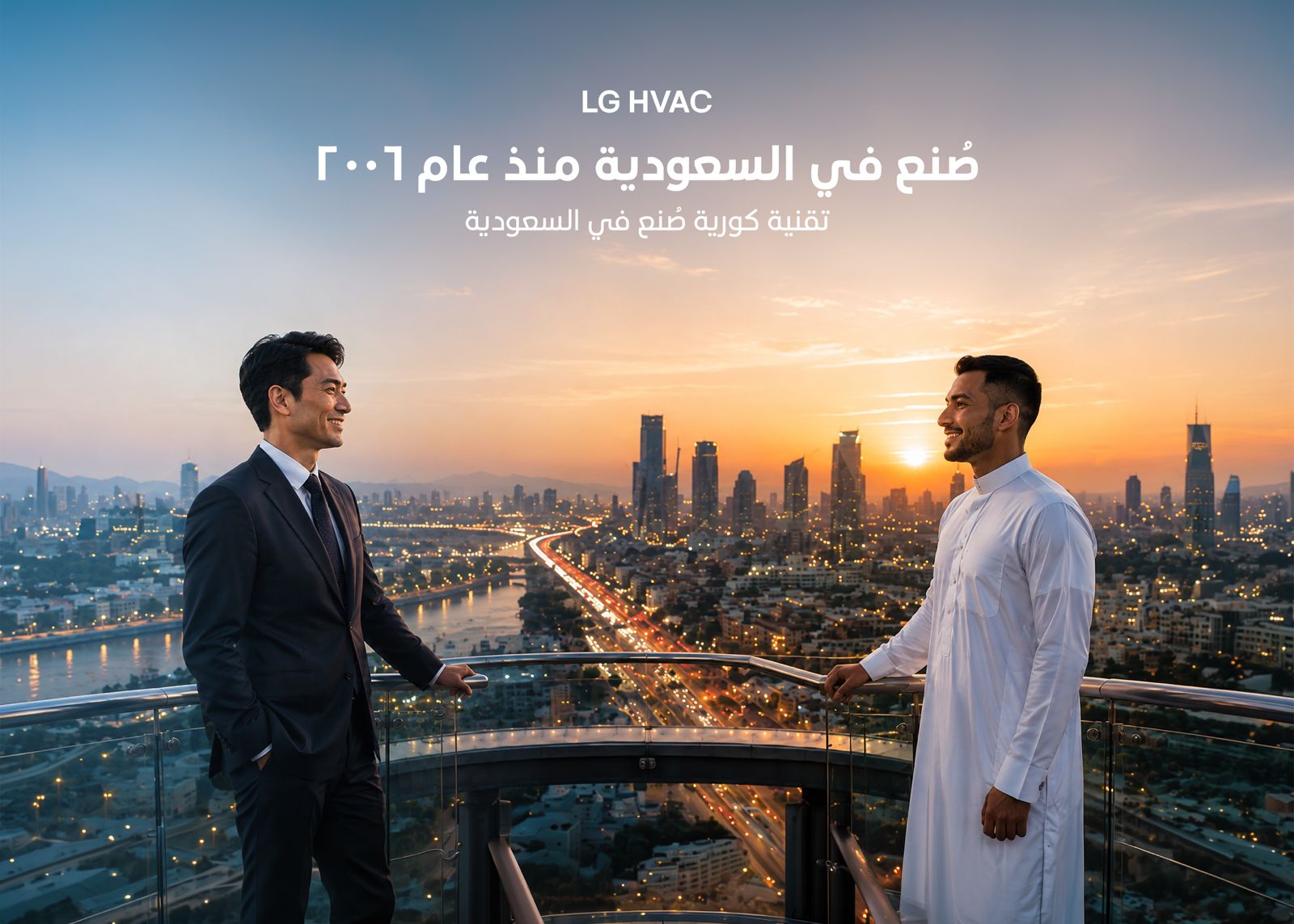
LG ELECTRONICS REAFFIRMS COMMITMENT TO LOCAL MANUFACTURING: 2026 RESIDENTIAL AIR CONDITIONER LINEUP PROUDLY FEATURES “SAUDI MADE” DISTINCTION
منذ 3 ساعات . News

Ten Days, Three Icons, One Bold Bet: Dhahran Mall Rewrites the Rules of Retail Entertainment
منذ 3 ساعات . News
Armah Sports Debuts on Saudi Main Market, Targets 50-Club Network by 2030
منذ 4 ساعات . News
# Disty Holdings Is Reimagining Procurement with AI
منذ يوم . News
Nutanix Showcases "One Platform, One Experience" at LEAP Saudi Arabia 2026, Highlighting AI, Hybrid Multicloud and Cloud-Native Innovation
منذ يوم . News
.jpeg)
Garmin Opens First Riyadh Store and Launches fēnix 9 Series in Saudi Arabia
منذ يومين . News