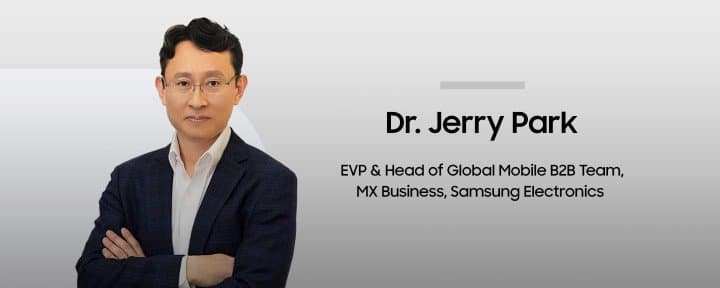
Leading the Way in Enterprise Mobile Security: Samsung’s Zero Trust Strategy

By Dr. Jerry Park, EVP & Head of Global Mobile B2B Team, Mobile eXperience Business at Samsung Electronics
Riyadh, Saudi Arabia – Jan 27, 2026 - Today’s world is one of
unprecedented innovation and rapidly evolving technology. It’s an era of endless
possibilities, coupled with a new set of risks for security and privacy. At
Samsung
Electronics, we recognize that as we enter these uncharted territories, we must
be prepared for potential threats that may arise. That’s why we stay deeply attuned to the
ever-changing security landscape and champion a dynamic approach to enterprise
security.
The cybersecurity threats of
today affect everyone, from consumers to businesses. Enterprise device fleets must
be resilient against attacks of all kinds — from suspicious URLs, insider
employee threats and malware, to emerging risks associated with AI usage in the
workplace, including prompt
injection and sensitive data leaks. As a growing number of employees across
industries — from corporate offices to the frontlines — use devices to access
enterprise networks and resources, these threats not only present significant security
risks but may also lead to a substantial financial toll on businesses.
Enterprise security incidents
can arise across operations. However, the International Data Corporation (IDC)[1] found that an
overwhelming 70 percent of successful breaches originate
from endpoints — the
devices that connect to networks like phones, laptops and tablets. Unfortunately,
in today’s security operations landscape, IT administrators have much less
visibility into mobile devices compared to PCs and servers. With mobile devices
now being the most common method of employee network access, this has to
change. A systematic, comprehensive approach is critical to ensuring seamless
mobile capabilities and uncompromising
protection. At Samsung,
we’re setting a new standard for mobile enterprise security by committing to a collaborative
Zero Trust strategy for endpoints in partnership with market leaders.
Core Principles for Zero Trust
Endpoint Security
Samsung’s legacy of innovation is built upon our deep
understanding of users. We’re constantly listening to feedback from
consumers and businesses, anticipating the evolution of mobile
technology. This is what enables us to pioneer industry-first solutions for
consumers and businesses alike. As the Head of the Global Mobile B2B Team, I’m
especially proud of how we’ve led the way in critical areas that deliver value
to enterprises across the board. From advancing hardware-backed device
attestation and threat detection to fully embracing the security principles of Zero
Trust, we are constantly striving to provide our customers with mobile devices
and solutions that exceed their security requirements.
Zero Trust is a security framework that
replaces implicit trust with explicit trust by continuously assessing security
posture, risk and trust levels based on context. The current security solutions
market is dominated by network-centric Zero Trust solutions that focus on
securing access at the network edge. Unfortunately, this approach by
itself neglects a critical blind spot: the endpoint. Endpoints have the
largest attack surface and are the most challenging IT assets to protect
against cyberattacks. In most cases, they are the most vulnerable points in an
organization’s IT ecosystem.
Zero Trust principles for endpoints, when
realized correctly, ensure that access requests from endpoints are handled
based on context that correlates with the device’s security posture and the
user’s needs, and are continuously verified in real time. Although there is no
definitive list of core principles behind Zero Trust endpoint protection, the
following principles are the most commonly adopted:
·
“Never trust, always
verify” approach for devices: Devices should no longer be
implicitly trusted just because they are within the network boundary. Instead,
each device needs to prove its trustworthiness before being granted access.
·
Continuous risk assessment and enforcement: Endpoint protection must
be agile and ready to adapt to constantly changing risk conditions. This means
continuously evaluating context — such as location, time of access and the device’s
security posture — and dynamically adjusting security policies
accordingly. Suspicious activity needs to be addressed through enforcement
actions such as access restrictions or complete isolation.
·
Restricted privileges and narrowly scoped
access: Endpoints
must enforce access control in real time based on context while ensuring
privileges are granted dynamically with a narrow scope.
·
Incorporation of user identity, device posture
and behavioral signals: A Zero Trust-compliant solution needs to make
granular and informed trust decisions to enforce tight access controls. To
enable such decisions, Zero Trust’s continuous evaluation of context integrates
user identity, device posture and behavioral signals.
While the Zero Trust security
strategy is growing in adoption, Samsung is fully embracing it. By doing so, we
are helping to protect the most vulnerable points in an organization’s IT
landscape. Risks related to endpoint security are constantly increasing as
cloud-based applications, Bring Your Own Device (BYOD) programs and remote work
prevail
in the modern workplace environment. Samsung recognizes the critical
nature of this problem and is proactively addressing it in collaboration with
partners.
Innovation and Collaboration for
Security at Every Level
How does this work in practice? From
the hardware level and all the way to the operating system and
secure interface, Zero Trust security principles are built into the
architecture of Samsung Galaxy devices, enhancing protection at every layer while intuitively
integrating with a business’s
existing security infrastructure. Together, these practices empower enterprises
to administer proper threat detection and response securely and reliably.
At Samsung, we recognize that security
is a collective effort. It is only through open collaboration with
partners that we can bring the most advanced solutions to our customers. In my time at Samsung, we’ve made
extensive strides in bringing forth versatile, optimized and secure solutions[2]
for enterprises of all kinds.
In 2024, we integrated Samsung
Knox — our defense-grade,
multilayer security management platform — with Cisco Secure Access, an innovative
Security Service Edge solution. This
collaboration delivers a
secure and flexible employee access experience, enabling organizations to
verify user identity, device posture and context before granting
access.
We also have a strong
partnership with Microsoft, defined by a shared vision of reimagining mobile
device security for business customers. The first
step of this strategic plan began in 2023, when we integrated Samsung Knox
with Microsoft Intune, creating the industry’s first on-device mobile
hardware-backed device attestation solution that works equally well on both
company and personal devices. This solution is now
enabled by default in all new Android App Protection Policies, empowering
organizations to bolster the security posture of all Samsung devices in their
fleet. In yet
another step forward in our partnership with Microsoft, Samsung has become the
industry’s first mobile manufacturer to offer a direct-to-security operations
center (SOC) connector. This was achieved through the integration
of Knox Asset Intelligence[3]
and Microsoft Sentinel, a scalable, cloud-native security
information and event management (SIEM) solution. This integration delivers
unprecedented visibility into mobile security threats, providing centralized
monitoring and protection across enterprise device fleets.
Working together with partners,
Samsung is addressing key challenges in multiple areas — securing mobile
devices, minimizing damage from potential attacks and empowering employees to
work efficiently and effectively without security concerns getting in their
way.
Holistic Security for Enhanced
Privacy
We’re constantly innovating,
refining and developing Samsung
Knox solutions in order to bring our customers enhanced control,
greater transparency and better protection against cyber threats.
By
embodying Zero Trust as a core pillar of Samsung Knox, every
measure is being taken to help secure mobile devices and data. At the same time,
Samsung is breaking new ground with first-to-market solutions by constantly
keeping a pulse on the ever-changing threat landscape.
As threats become increasingly
complex with AI and hyperconnectivity taking center stage, security
and privacy are more
important now than ever before. Today’s business landscape is constantly being
threatened by an increasing volume of cyberattacks that aim to exploit IT vulnerabilities,
with mobile devices and other endpoints quickly becoming prime targets.
That’s why Samsung is working
with market-leading companies to provide security solutions that work
seamlessly with existing infrastructure, offering true end-to-end protection.
These collaborative solutions are a testament to our commitment to not only
adhere to industry standards but to also drive their continued development when
it comes to Zero Trust endpoint security. This is just the beginning.
To learn more about Samsung
Knox’s approach to mobile security, visit samsungknox.com.
About Samsung Electronics Co., Ltd.
Samsung inspires the
world and shapes the future with transformative ideas and technologies. The
company is redefining the worlds of TVs, digital signage, smartphones,
wearables, tablets, home appliances and network systems, as well as memory,
system LSI and foundry. Samsung is also advancing medical imaging technologies,
HVAC solutions and robotics, while creating innovative automotive and audio
products through Harman. With its SmartThings ecosystem, open collaboration
with partners, and integration of AI across its portfolio, Samsung delivers a
seamless and intelligent connected experience. For the latest news, please
visit the Samsung Newsroom at news.samsung.com
[1] The Hacker News, “10 Critical Endpoint Security Tips You Should Know,” April 26, 2024 (reporting IDC data)
[2] Cisco Secure Access, Microsoft Intune and Microsoft Sentinel are third-party
solutions and paid offerings.
[3] Knox Asset Intelligence
is a paid offering available through Knox Suite Plans.
مواضيع ذات صلة
# Disty Holdings Is Reimagining Procurement with AI
منذ ساعتين . News

Nutanix Showcases "One Platform, One Experience" at LEAP Saudi Arabia 2026, Highlighting AI, Hybrid Multicloud and Cloud-Native Innovation
منذ 6 ساعات . News
.jpeg)
Garmin Opens First Riyadh Store and Launches fēnix 9 Series in Saudi Arabia
منذ يوم . News

Award-Winning Portuguese Chef Ana Magalhães Leads the Culinary Vision at Tabrah, Nujuma, a Ritz-Carlton Reserve
منذ يومين . News

Saudi Wood Expo opens next week at Riyadh Front Exhibition & Conference Center, bringing wood solutions and international expertise from 30 countries
منذ يومين . News
Samsung Galaxy S26 FE: Delivering the Latest Flagship Experience, Focused on What Matters Most
منذ يومين . News

Logitech brings the future of AI-powered workplaces to LEAP 2026
منذ يومين . News
.jpeg)
IFS Brings Industrial AI From Experimentation to Execution at LEAP 2026
منذ يومين . News
webook.com Shares Success of its Global Scale with Esports World Cup Delivery in Paris
منذ يومين . News