-extra_large.jpg&w=3840&q=75&dpl=dpl_9RvDZKR1K3WLUpDW1QCAJspP4yJ5)
In the age of AI, creativity and strategic storytelling remain key for Gulf marketers and communication specialists

Manal Saleh
Action Global Communications’ first tech
survey sees Middle East industry professionals call for smarter, story-driven
communications that reflect local voices and global vision
·
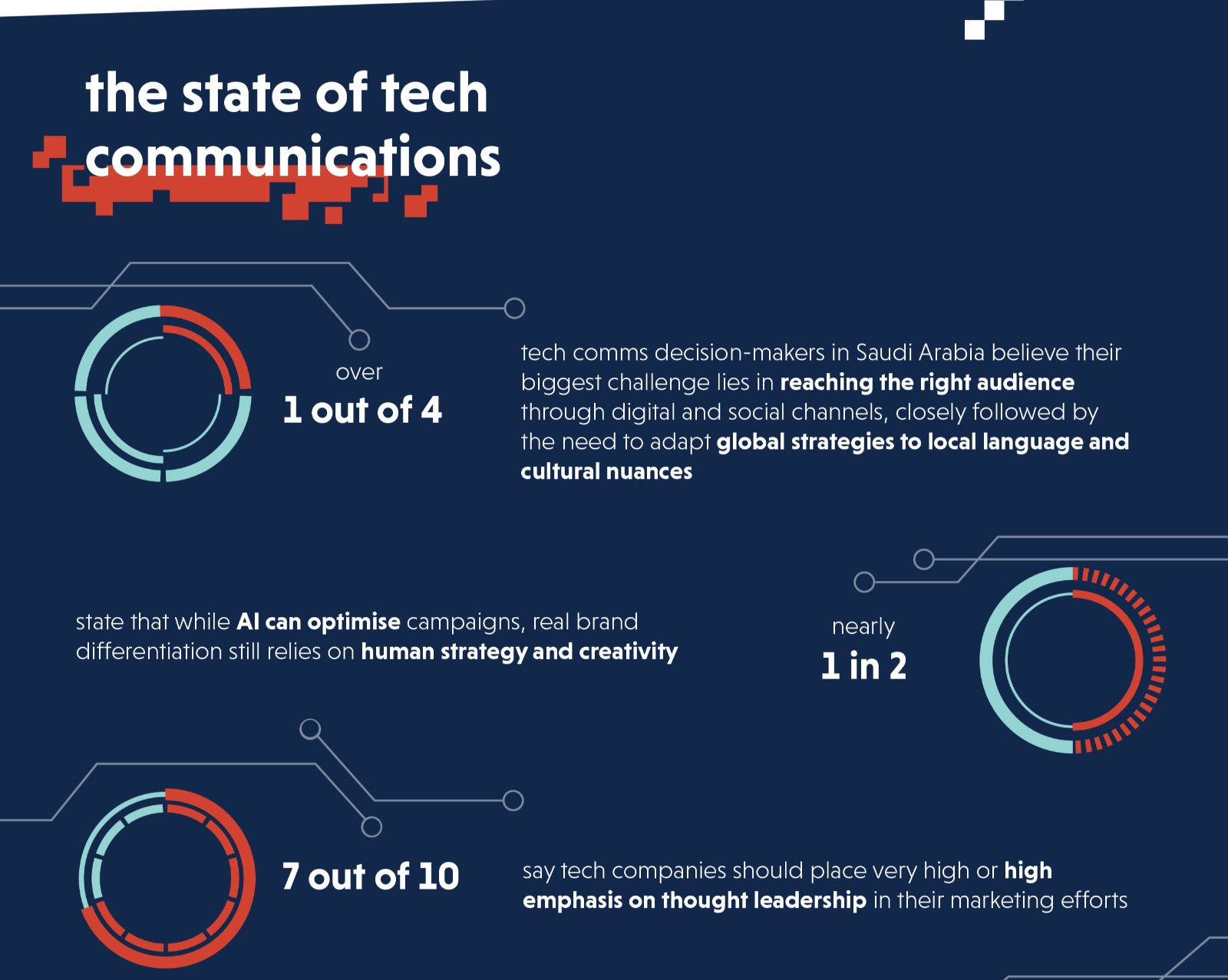
Close to half of survey respondents
believe AI can optimise campaigns, but true differentiation continues rely on
cultural understanding and strategic insight
·
45% of respondents say digital and
social channels are their biggest marketing challenge
·
43% believe most common mistake is
focusing on product features instead of customer value
·
Over 80% stress thought-leadership
deserves greater emphasis in marketing strategies
·
Region-specific strategies and
understanding cultural nuances are top regional priorities
Riyadh, KSA- January 21, 2026: Nearly half of the technology
marketers and communication professionals across the UAE and Saudi Arabia
believe AI is enhancing efficiency but that creativity, storytelling, and
cultural understanding remain the true differentiators in an increasingly competitive
digital landscape.
That is just one of the takeaways from a new survey conducted by Action Global Communications in partnership with IMR/University of Nicosia. Entitled ‘Cracking the Code of Tech Comms’, the study canvassed more than 600 marketing and communications professionals from across the technology sectors of the Emirates and KSA, with the findings revealing a desire for balance between automation and authenticity.
“This survey confirms what we see every day; the future
of communications will belong to those who combine data-driven precision with
creative human insight,” said Euan Megson, Managing Director – MENA at Action
Global Communications. “In an age of unprecedented change, businesses must
engage audiences on a deeper level in today’s crowded digital landscape, be it
through insights or entertainment.”
The Role of AI in Brand Differentiation
Across both the UAE and Saudi Arabia, 46 per cent of
comms professionals said that while AI enhances campaign efficiency true brand
differentiation still depends on creativity and strategic insight, while 30 per
cent view AI as a driver for personalisation and engagement, and a further 21
per cent see it mainly as operational.
Forcepoint, an AI-native data security company, noted
that as digital transformation accelerates, customers are placing greater
weight on clarity, accountability and trust — qualities that shape a brand’s
reputation as much as its technology.
“As new digital tools reshape how information is created
and shared, organizations need more than good storytelling — they need clarity
their customers can rely on,” said Emre Onat, Senior Regional Marketing
Manager, Forcepoint. “People want to know what’s happening with their data, how
risks are being addressed and why the information they use strategically for
marketing, business intelligence, and customer services is secure. Our
Self-Aware Data Security approach brings visibility, context and responsible
action together to reinforce trust and strengthen every digital interaction.”
Adding a Saudi perspective, Marilena Nikou, Senior
Marketing Strategy Executive at Odyssey Cybersecurity, agreed with 43 per cent
of respondents in her belief that too many brands are still missing the
customer-value message.
“It is encouraging as an industry to see such insight and
commonalities,” said Nikou. “One key finding I believe is crucial, and I
am happy to see I’m not alone, is the mistake in communications focusing on
product features instead of customer value. To engage audiences, we must focus
messaging on the value we create and not the product features. In
cybersecurity, we should position it as a business enabler for growth and risk
mitigator, while communicating outcome-driven benefits.”
Rise of Story-driven Communications
In terms of effectiveness, visual storytelling ranked as
the most effective method to explain complex technologies in the two Arabian
Gulf markets. Around 40 per cent of respondents preferred videos, infographics,
and demos, while others valued emotional storytelling and real-world cases.
Marketers in both countries agree that proof-driven, human-centric narratives
resonate most strongly. This is reflected in the growing importance of thought
leadership, with more than 75 per cent of respondents believing it should be a
central pillar of tech marketing.
Genesys, a leader in AI-powered customer experience,
highlighted the challenge of staying relevant amid digital saturation. “Digital
and social platforms have become oversaturated, and every company is trying to
be omnichannel, which often creates more noise than connection,”
said Cyril Largent, Regional Marketing Manager Middle East, Türkiye and
Africa, Genesys.
“What truly resonates is storytelling that highlights
value and impact. Video and emotional content outperform text because they are
relatable and human. Many technology companies are still too product focused;
what connects with audiences today is authenticity and relevance. AI is a
powerful enabler, but it cannot replace human creativity or insight.”
The Role of PR in Simplifying Technology
Other key challenges professionals face is reaching the
right audience, building brand credibility quickly, and adapting global
strategies to local cultures.
Logicom, a leading distributor of technology solutions in
the Middle East, believes multi-faceted PR plays a crucial role in bridging
that gap. “The UAE is shaping the global technology landscape, yet many brands
still struggle to connect meaningfully with their audiences,” said Jean Magdy, IT
Specialist, Logicom. “Marketing efforts that rely solely on digital campaigns
and performance metrics often miss the storytelling that gives a brand its
lasting value. Digital marketing alone does not deliver ROI; companies need a
full 360-degree approach that blends PR, content, and customer engagement.
“For B2B organisations, visual content such as videos and
demos help customers see how technology drives real productivity and
efficiency. PR remains fundamental as it helps simplify complex technology for
our audiences and demonstrate real impact.”
Local Insight and Regional Relevance
Elsewhere, communicators are focused on lead generation,
localised storytelling, and brand differentiation, with nearly 40 per cent
allocating budget to focus on integrated communication strategies that combine
PR, content, and digital marketing.
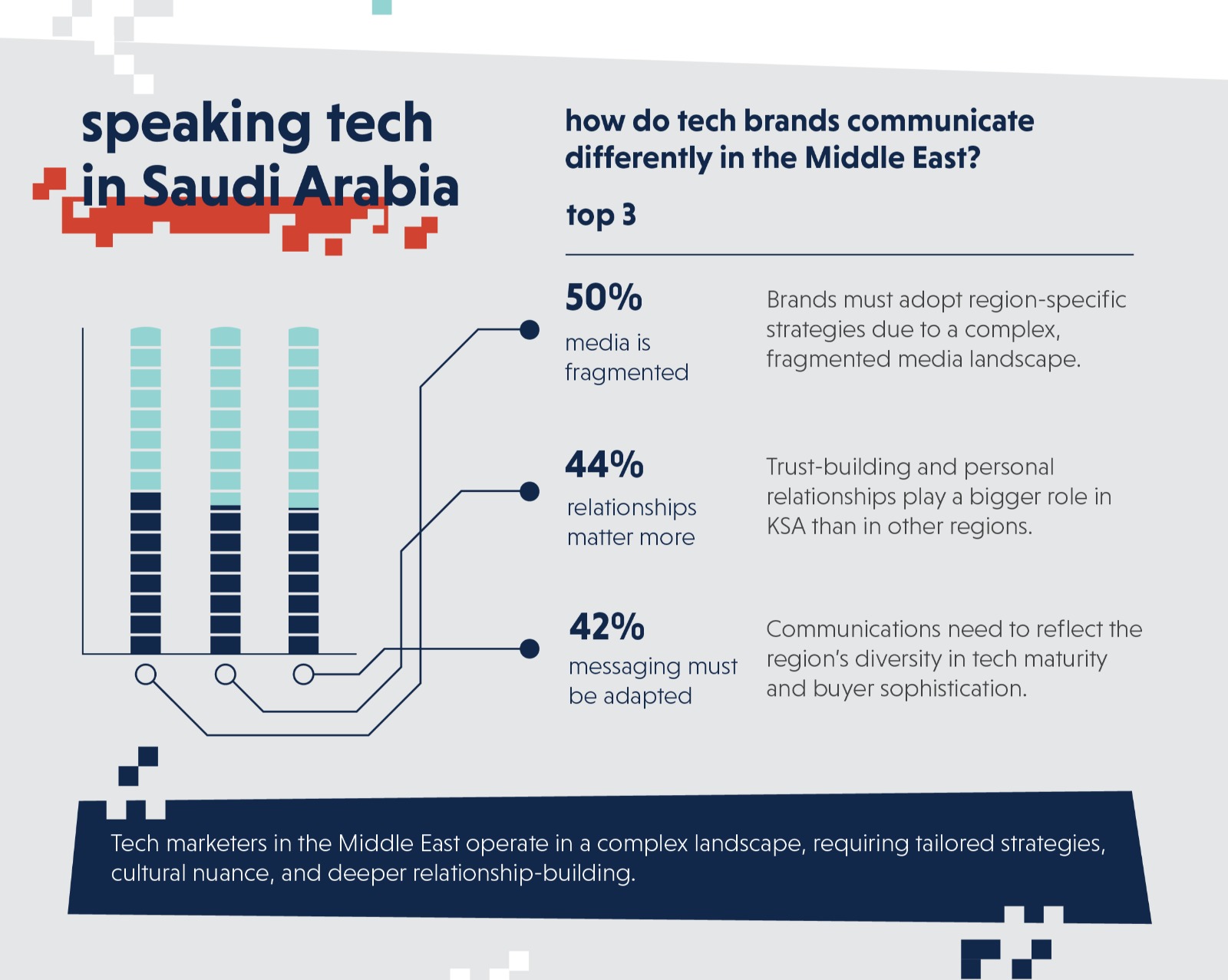
Respondents also emphasised that local insight, trust,
and authenticity are key to successful communication, with more than half
highlighting the importance of personal relationships and culturally nuanced
messaging. Around 45 per cent also cited fragmented media landscapes and the
need for region-specific strategies.
Furthermore, respondents expressed optimism for the
region’s technology future, ranking AI and automation highest for five-year
growth potential, followed by Fintech, Healthtech, Edtech, and Logistics/Supply
Chain. These findings reflect a confident, forward-looking technology landscape
shaped by local authenticity and global ambition.
As developments in AI and digital technology continue to
disrupt the marcomms sector, the report by Action Global Communications
highlights the significance of storytelling that connects emotionally. Camilla
d’Abo, the agency’s Managing Director – UAE, concluded: “Collating all key
insights, our survey underscores the key factors for success in modern
communications, highlighting the overt need for brands to engage audiences on a
deeper and more human level in today’s crowded digital landscape.”
ENDS
مواضيع ذات صلة
# Disty Holdings Is Reimagining Procurement with AI
منذ 4 ساعات . News
Nutanix Showcases "One Platform, One Experience" at LEAP Saudi Arabia 2026, Highlighting AI, Hybrid Multicloud and Cloud-Native Innovation
منذ 8 ساعات . News
.jpeg)
Garmin Opens First Riyadh Store and Launches fēnix 9 Series in Saudi Arabia
منذ يوم . News

Award-Winning Portuguese Chef Ana Magalhães Leads the Culinary Vision at Tabrah, Nujuma, a Ritz-Carlton Reserve
منذ يومين . News
Saudi Wood Expo opens next week at Riyadh Front Exhibition & Conference Center, bringing wood solutions and international expertise from 30 countries
منذ يومين . News
Samsung Galaxy S26 FE: Delivering the Latest Flagship Experience, Focused on What Matters Most
منذ يومين . News

Logitech brings the future of AI-powered workplaces to LEAP 2026
منذ يومين . News
.jpeg)
IFS Brings Industrial AI From Experimentation to Execution at LEAP 2026
منذ يومين . News
webook.com Shares Success of its Global Scale with Esports World Cup Delivery in Paris
منذ يومين . News