-extra_large.jpg&w=3840&q=75&dpl=dpl_9RvDZKR1K3WLUpDW1QCAJspP4yJ5)
Achievements and Discoveries of the Abu Dhabi Museum of Natural History

Manal Saleh
1. Pioneering Discoveries in Paleobiology and Modern Aviation Technologies The Abu Dhabi Museum of Natural History, in collaboration with the University of Manchester, has uncovered three-dimensional microscopic structures within the bones of pterosaurs from the Jurassic era. This engineering breakthrough could contribute to the development of lighter, stronger, and more fuel-efficient materials in modern aviation. The results of this research were published in Scientific Reports of Nature, reinforcing the museum's stature as a leading global institution that connects natural history with advanced technologies in aviation. This research was led by Professor Dr. Philip Manning, Deputy Director of Scientific Research at the Abu Dhabi Museum of Natural History.
2.
Significant
Contributions to Planetary Sciences and Planetary Defense Dr. Ludovic Ferrier,
a curator at the Abu Dhabi Museum of Natural History, has played a pivotal role
in international efforts to recover and analyze fragments of asteroid 2023 CX1,
including the Saint Pierre-Lefigey meteorite. As a co-author of the study
published in Nature Astronomy regarding the first trace of an asteroid fully
tracked before entering the atmosphere, his work exemplifies the museum's
leadership in planetary defense research and global scientific collaboration.
Scientific Partnerships
The Abu Dhabi Museum of Natural History bolsters a strong network of
local and international partnerships to support advanced research and
innovation. Through collaborations with leading institutions worldwide, the
museum contributes to the advancement of scientific knowledge and cultivates a
vibrant research culture based on discovery and knowledge exchange.
Laboratories at the Abu Dhabi Museum of Natural History
1.
Fossil Lab The
Fossil Lab provides visitors with the opportunity to observe the preparation of
real fossils and gain insight into the museum's research. Museum scientists
work with original specimens and demonstrate methods for cleaning, studying,
and preserving fossils. Visitors can interact directly with paleontologists,
ask questions, and even handle some fossil materials designated for
experimentation. The lab serves as an educational space that connects the
public with the latest research and techniques in paleontology.
2.
Life Sciences
Lab Scientists in the Life Sciences Lab explore the vast biodiversity of Earth
through the study of specialized scientific collections. Various samples are
collected to research the adaptation, behavior, and ecological relationships of
organisms. Researchers continually develop new techniques and interventions
that contribute to the protection and preservation of global biodiversity,
making the lab a center for research and awareness of environmental
sustainability.
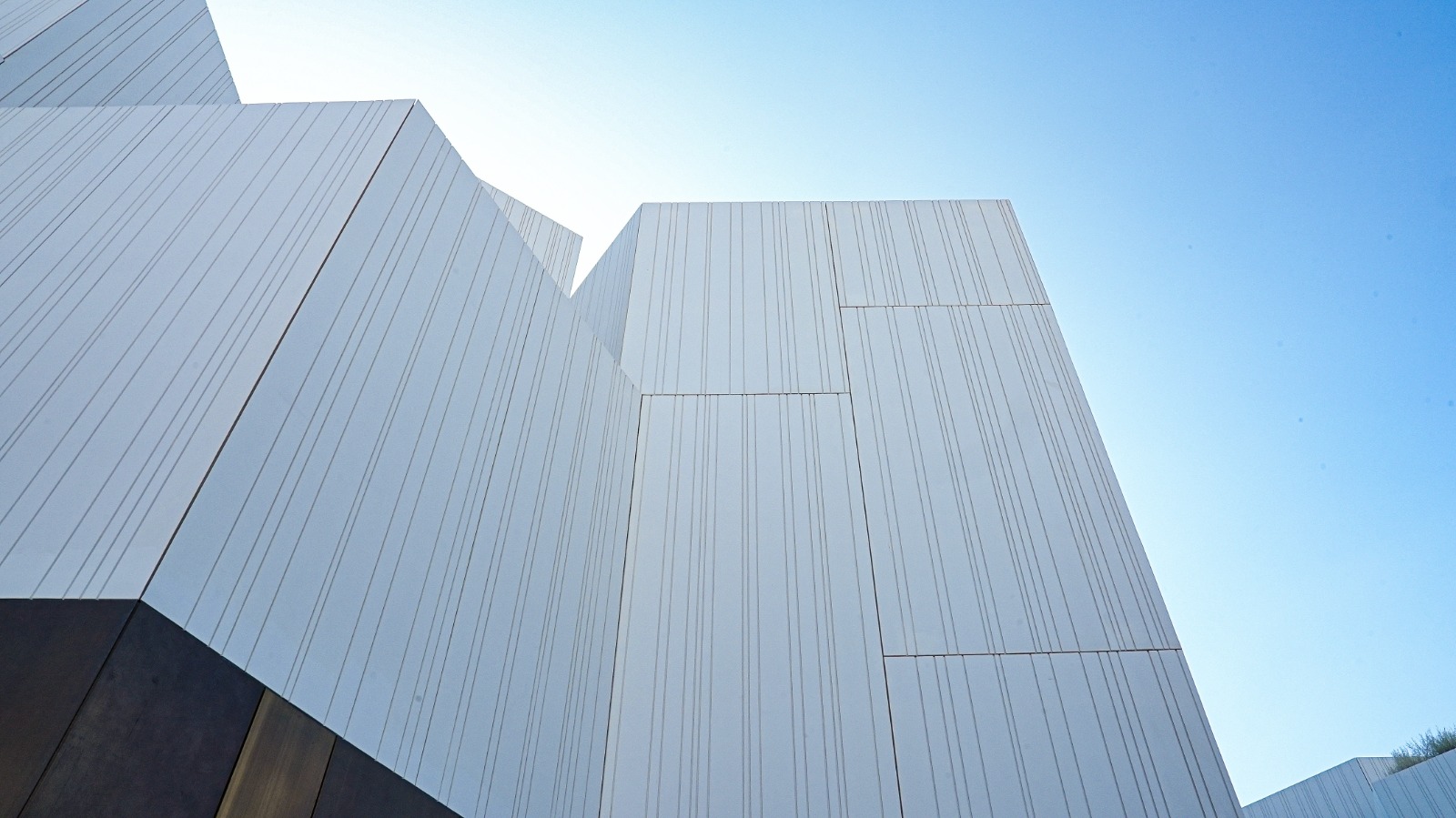
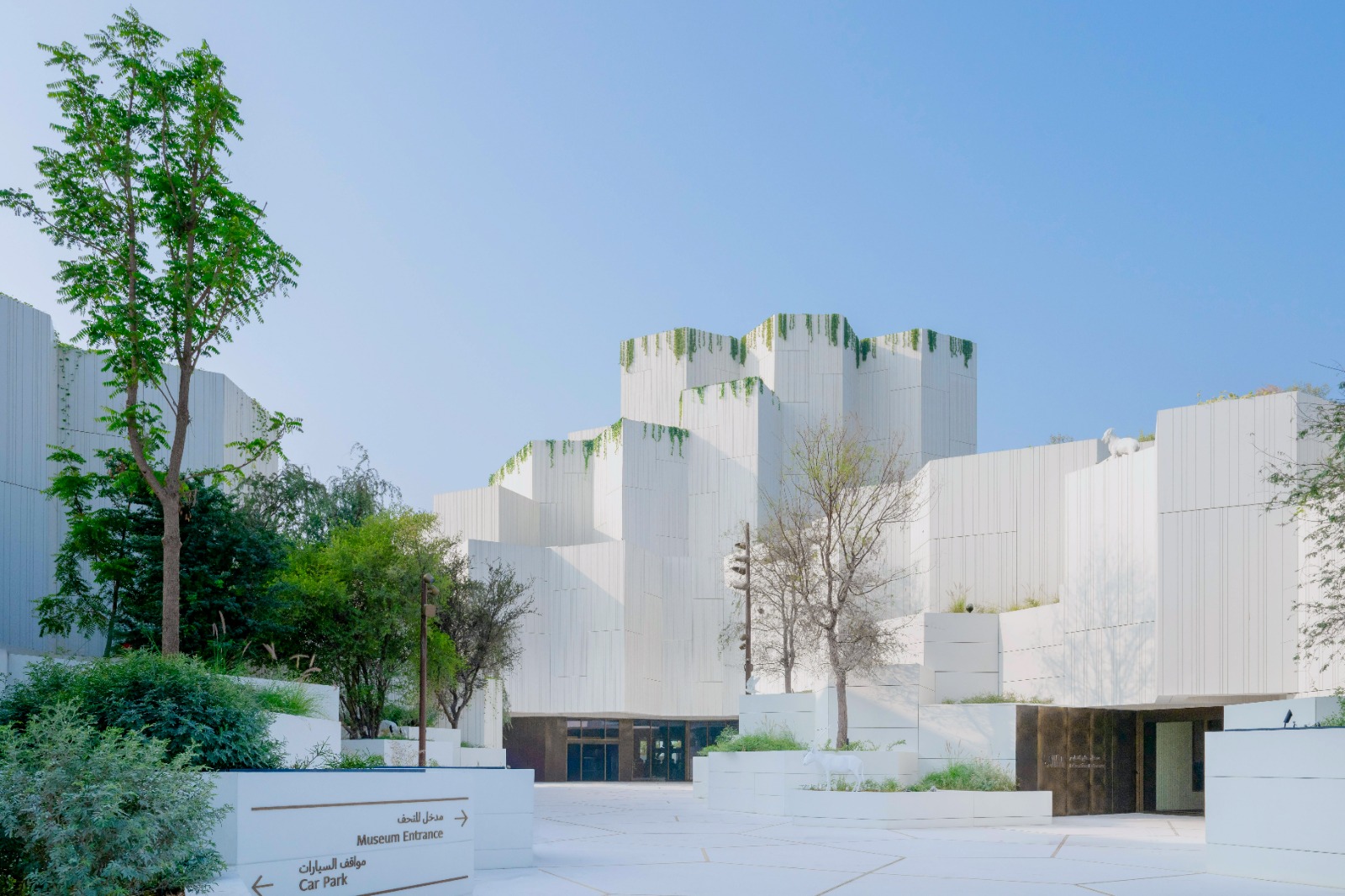
The Abu Dhabi Museum of Natural History spans over 35,000 square meters and was designed by the global architectural firm Mecanoo to embody natural rock formations, directly reflecting the museum’s mission to enhance visitors' understanding of and connection to the natural world. The geometric layout serves as a key element in the design, with pentagonal shapes inspired by cellular structures found in nature recurring throughout. Water and plants play a central role in the architectural composition, representing essential symbols of life in the desert environment.
In addition to permanent exhibition halls, the museum features spaces
dedicated to temporary exhibitions and special events, as well as theater
facilities designed for cultural and educational purposes. Construction works
have already begun at the museum's site, signaling the start of the first phase
of developing this prominent cultural and scientific landmark.
1.
What is the
philosophy or core inspiration behind the design concept of the Abu Dhabi
Museum of Natural History? The design vision is based on a profound personal
memory experienced by architect Nuno Fontarra in his childhood, as he explored
tidal rocks in Porto, Portugal. Each ascent and descent on these rocks revealed
a new small world between stone and water, igniting his sense of curiosity and
discovery. These early moments shaped his understanding of how humans interact
with nature as a space for exploration and adventure. Mecanoo translated this
memory into the context of Abu Dhabi, drawing inspiration from the spirit of
the wadi—not just as a seasonal water channel but as a natural structure that
signifies movement, life, and direction in the desert. Thus, the museum emerged
as a rocky formation extending across an "urban wadi," standing at
the threshold between land and sea. The building is rooted in the desert sands
while simultaneously opening to the gulf, guiding visitors through spaces that
change rhythmically as tides ebb and flow, evoking the sculpted landscapes of
the wadi over time. For Mecanoo, the building is not seen as a mass of
architecture placed above the ground, but as part of it: a dwelling woven into
the natural fabric that reveals the continuity of desert, rocks, wadi, and sea
as a unified system integral to the experience of discovery.
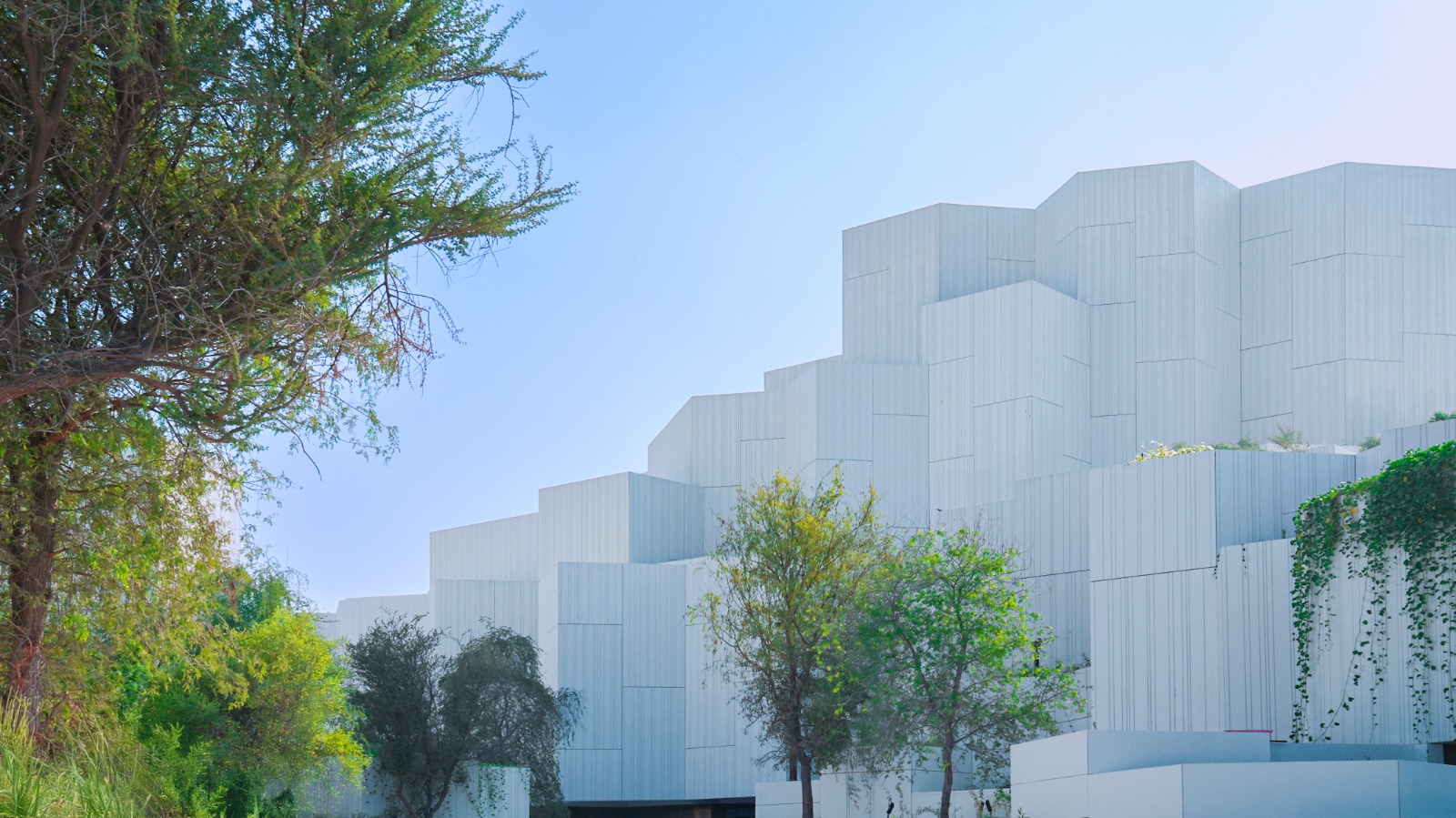
2. What are the prominent architectural elements that distinguish the Abu Dhabi Museum of Natural History? The most notable architectural feature of the museum is its system of hanging gardens, which transforms the building into a vibrant natural scene where urban development blends with public spaces and environmental elements. These gardens create green layers that cascade over the facades and structures, making the museum a lively entity connected to its surroundings rather than separate from it.
3.
How does the
design enhance the visitor experience within the museum? The hanging gardens
turn the museum into a dynamic and interactive space, where the building
becomes part of the natural environment, and nature forms a part of the
movement paths within the building. This integration creates an immersive
experience for visitors, making each step a journey of exploration and granting
everyone the role of a "scientist" discovering new layers of the
story told by the place.
4.
How have
community views and local culture contributed to shaping the final design? The
final design was inspired by the spirit of the urban wadi, which encourages
movement and discovery while reflecting the lifestyle patterns in Abu Dhabi.
Mecanoo designed two main pathways that allow the public to navigate freely
between different blocks of the building and explore the waterfront. Thanks to
the abundance of public spaces provided by the building, the museum has become
a true community gathering point. At sunset, the space allows visitors to enjoy
quiet strolls, creating an experience that aligns with local customs and
behaviors, fostering an environment where people feel familiarity and
connection.
5.
How does the
design accommodate future growth needs, changes, or technological developments?
The building follows a modular approach that allows it to evolve over time,
much like the cellular structures from which the architectural inspiration is
drawn. This approach makes it easy to add new spaces or develop internal
functions, accommodating future requirements and advanced technologies without
compromising the original identity of the building.
6. Does the museum include special systems for controlling indoor air quality, particularly for protecting specimens and collections? Yes, the museum is equipped with advanced climate control and air quality systems to ensure the protection of both visitors and scientific specimens. These systems regulate temperature, humidity, and particulate matter levels, providing an optimal environment for preserving samples in the long term.
مواضيع ذات صلة
Armah Sports Debuts on Saudi Main Market, Targets 50-Club Network by 2030
منذ 53 دقيقة . News

# Disty Holdings Is Reimagining Procurement with AI
منذ 21 ساعة . News
Nutanix Showcases "One Platform, One Experience" at LEAP Saudi Arabia 2026, Highlighting AI, Hybrid Multicloud and Cloud-Native Innovation
منذ يوم . News
.jpeg)
Garmin Opens First Riyadh Store and Launches fēnix 9 Series in Saudi Arabia
منذ يومين . News
Award-Winning Portuguese Chef Ana Magalhães Leads the Culinary Vision at Tabrah, Nujuma, a Ritz-Carlton Reserve
منذ يومين . News
Saudi Wood Expo opens next week at Riyadh Front Exhibition & Conference Center, bringing wood solutions and international expertise from 30 countries
منذ يومين . News

Samsung Galaxy S26 FE: Delivering the Latest Flagship Experience, Focused on What Matters Most
منذ يومين . News
Logitech brings the future of AI-powered workplaces to LEAP 2026
منذ 3 أيام . News
.jpeg)
IFS Brings Industrial AI From Experimentation to Execution at LEAP 2026
منذ 3 أيام . News