Samsung Celebrates 40 Years of Appliance Innovation at IFA 2025

Manal Saleh
Riyadh, Saudi Arabia – Aug 31, 2025 - The appliance
innovation legacy of Samsung Electronics extends from microwave ovens
with TVs and talking refrigerators to IoT-enabled refrigerators. These appliances
have
steadily evolved into today’s Bespoke AI lineup — products that understand
users and provide personalized solutions.
Under the theme “AI Home: Future Living, Now,” Samsung will
present an advanced AI Home experience[1]
at IFA 2025, Europe’s largest home appliance exhibition, taking place in Berlin
from September 5-9.
As the event draws nearer, Samsung Newsroom is taking a closer
look at the company’s innovation trajectory
and how its appliances have advanced into the future.
From the Talking Refrigerator to Bixby, and
Now a Voice-Connected Home
Samsung marked the beginning of voice-enabled
appliances in 1985 with the debut of its
Talking Refrigerator. Later equipped with early speech synthesis technology in
1989, the product went beyond simple voice guidance by offering scheduled playback of
recordings, a family memo feature and door-open alerts — laying the foundation
for AI-enabled voice interaction.
This early innovation eventually evolved into
Bixby[2],
Samsung’s AI voice assistant introduced in 2018. Bixby has since become the intelligence
and control hub of the company’s home appliances, enabling voice control across
refrigerators, air conditioners, washing machines and more. With Voice ID[3],
the AI assistant can now even recognize individual users to provide customized
information.
Appliance Screens, Now the Hub of the Home
Samsung was an early pioneer of the concept
of “screen appliances,” presenting a vision for the future of connected homes. In
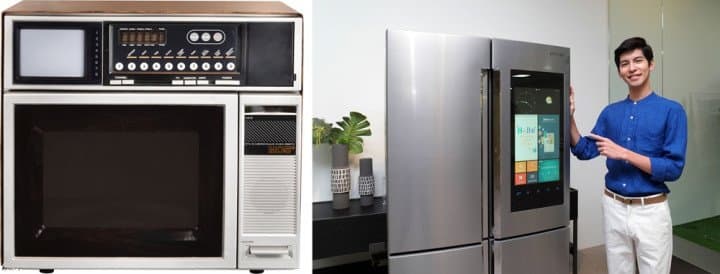
1982, the company introduced a multi-purpose microwave with a screen, which not
only allowed users to check cooking instructions but also watch TV and even
monitor home entry with surveillance camera functions. Later, Samsung expanded
the role of the screen to refrigerators, transforming them from simple storage
units into the hub of daily family life.
In 2016, Samsung launched the Family Hub
refrigerator — an IoT-enabled fridge. Equipped with a 21.5-inch touchscreen and
internal cameras, it allowed users to check the status of their food items and
manage grocery shopping online, opening up a completely new kitchen experience.
Since then, refrigerators, washing machines, air conditioners and other
appliances have been connected through SmartThings[4],
with screens that have evolved into control hubs that let users monitor and
manage smart devices throughout the home at a glance.
From Neuro-Fuzzy Washers to Bespoke AI: The
Evolution of Intelligent Appliances
Samsung took its first step toward
intelligent appliances in 1980 with the launch of an air conditioner embedded
with a microcomputer chip. This spirit of innovation continued into the 1990s,
when Samsung launched the Neuro-Fuzzy washing machine which features the fuzzy
logic IC[5]
and neuro-algorithms, in 1991. Using optical sensors, it detected soil level,
load size and water temperature, then automatically optimized the wash cycle — introducing
the concept of appliances that sense, decide and deliver personalized
solutions.
In 2018, Samsung launched the QuickDrive
washing machine, which applied AI-based curation to recommend wash cycles based
on fabric type, color and soil level. This innovation laid the groundwork for
the Bespoke AI Laundry Combo, equipped
with OptiWash and AI Optimal Dry, which automatically detect fabric types and
soil levels to deliver optimized wash cycles and drying temperatures.[6]
Samsung also brought intelligence to vacuum
cleaners with the Hauzen robot vacuum in 2006. Using a gyro sensor, it
calculated distance and angles to map out optimal cleaning routes through
self-mapping capabilities. This marked a shift from simple dust collection to
appliances capable of responding to their environment. Today’s Bespoke Jet Bot
Combo builds on this legacy with advanced security and AI-powered camera
sensors that recognize and avoid objects[7],
distinguish floor types[8]
and navigate more intelligently.
Innovative Appliance Lineup
at IFA: An AI Home Tailored to You
At IFA 2025, Samsung will
showcase an even more advanced AI Home, powered by its 2025 Bespoke AI
appliance lineup.
“Based on Samsung’s legacy of innovation, we
will continue to deliver greater convenience and value in users’ daily lives,” said
Jeong Seung Moon, EVP and Head of the R&D Team at Samsung Electronics'
Digital Appliances (DA) Business. “By
setting a new standard for personalized AI Home experiences, we aim to further
solidify the idea that ‘Samsung = AI appliances.’”
###
[1]
AI-based
features are available on certain appliances, and based on our deep learning
model, which is trained using a predefined set of data and may yield incomplete
or incorrect information. New datasets may be introduced to our learning model
from time to time to enhance its accuracy.
[2]
Bixby
is Samsung’s brand of Internet of Things (IoT) voice assistant. Bixby service
availability may vary depending on country. Bixby recognizes selected languages
and certain accents/dialects. The user interface may change and differ by
device. The availability of Bixby features and content providers may vary
depending on the country/carrier/language/device model/OS version. A Samsung
account log-in and data network connection (Wi-Fi or data network) are
required. Users must agree to the update to use this function.
[3]
The
Voice ID feature on Samsung home appliances supports registration of up to six
users. Currently available on select Samsung Family Hubs and refrigerators and
may vary by model and region. Each user must register for a Samsung Account on
screen appliances in advance. The Calendar app supports integration with Google
and Microsoft, and may vary by model and region.
[4]
Available
on Android and iOS devices. A Wi-Fi connection and a Samsung account are
required.
[5] Fuzzy logic is an
approach to computing that mimics human reasoning by using degrees of truth
instead of strict yes/no values, and an integrated circuit (IC) is a chip that
contains electronic circuits to perform specific functions.
[6]
Fabric
sensing uses an AI algorithm to sense certain types of fabric types for loads
up to 8 lbs. A turbidity sensor operates for all weights. Mixed
fabrics may reduce detection accuracy. Actual results may vary depending on
individual use. To prevent wear, wash and dry like fabrics together.
[7]
Object
recognition may be affected by an object’s shape or the environmental
conditions. Only certain object types can be recognized. Stained Area
Recognition needs to be activated beforehand via the SmartThings App. A Wi-Fi
connection and Samsung account are required.
[8]
Based
on our deep learning model trained using a predefined set of data and may yield
incomplete or incorrect information. New datasets may be introduced to our
learning model from time to time to enhance its accuracy.
مواضيع ذات صلة

LuLu KSA Launches Convenient Udhiya Pre-Ordering with Free Slaughtering Services*
منذ 13 ساعة . News
AppyThings launches Saudi entity to support AI-native digital infrastructure in the Kingdom
منذ 13 ساعة . News
GWM Unveils Next-Generation GWM ONE S (Gui Yuan) Platform, 4.0T V8 Engine and more at Auto China 2026
منذ 15 ساعة . News

Netflix Announces “The Netflix Effect,”Highlighting Global Economic, Cultural and Social Impact
منذ 15 ساعة . News

New Balance Brings Grey Days to Life with Community-Led Grey Runs Across the Region
منذ 17 ساعة . News
The FIT Series Evolves: HUAWEI WATCH FIT 5 Pro Becomes a Daily Companion for Wellness, Style, and Smart Training
منذ يوم . News
.jpeg)
Accessible Flagship Smartphones Might be the Best Value for Consumers in 2026
منذ يوم . News
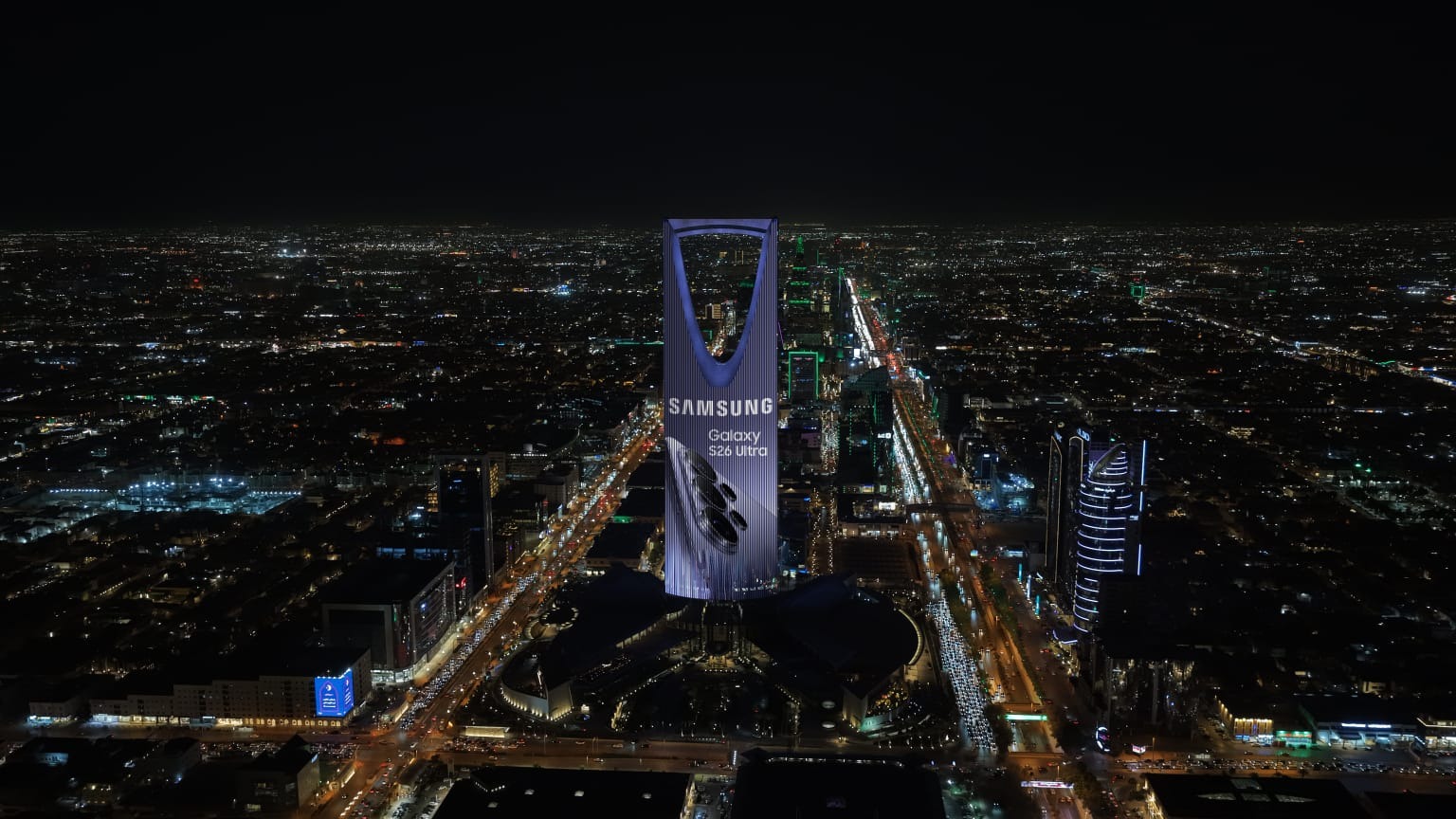
Samsung Galaxy S26 Series Launch Dominates Saudi Skies with Exclusive Rotana Signs Nationwide Takeover
منذ يوم . News
.jpeg)
Binghatti Delivers 10th Consecutive Record Quarter with AED 1.43 Billion Net Profit in Q1 2026
منذ يوم . News